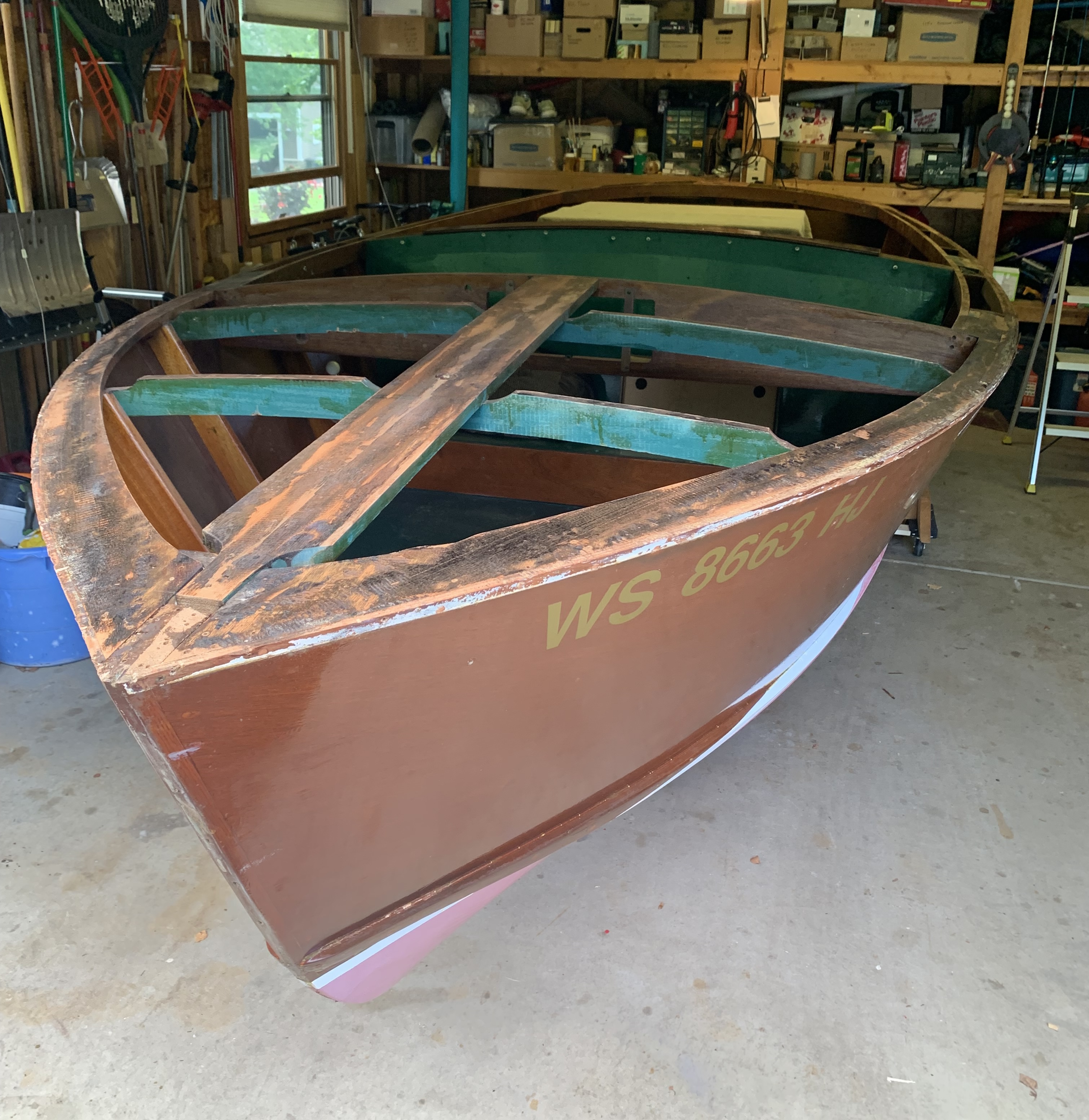
It was in good shape but all of a sudden, the top deck ply is delaminating all over. This deck is 3/8” Chris Craft manufactured mahogany plywood and glued down with a black, now very hard adhesive at all contact to frame points. CC used screws and mostly nails to fix the sheets in place while glue set-up. The history books say it’ was a Thiokol product.
Anyone know about this glue? And a good method of removing this deck and glue, while saving the framework?
And what glue would be good for the new deck, 3M 5200?
like abut everything else that works, thiokol they say causes cancer…got ditched.
resorsinol…spelling? is that black stuff thiokol was mostly sort of whitish grey?
5200 is the way to go. John in VA
A technique from Don Dannenberg’s books talks about using a plunge router set to the thickness of the deck and then milling off the deck where it attaches to the deck frames. If done properly, minimal damage to the frames and the router bit should chew through the adhesive. Obviously you need to be sure there are no nails or screws still holding this together as the router bit won’t tolerate those. Wear protective eyewear. You won’t be left with the old deck plywood to use a pattern though.
It turned out the top deck ‘black glue’ was a non-factor, for the most part the top decking pieces popped off….with a major prybar effort. This ‘55 Cavalier was made in Carruthersville, MO. They used #6 silicone bronze screws fastening down just the perimeter of the forward decking on 4” centers. For the most part, the builders used regular galvanized finish nails, over 300, 6d (penny) x 1-1/2” on 3-1/2” centers to fasten down all the decking pieces. After 70 rears, The galvanized nails corroded & promoted wood staining, ruining the deck appearance.
These Cavaliers used 3/8” Chris Craft manufactured Mahogany plywood topsides and deck, plus 3/8” Douglas Fir plywood bottoms. Only the top decking delaminated, topsides and bottom, with no nails are ok.
What is recommended for the 3/8” marine plywood top decking, Okoume- easier to cut and work, or Merranti-more difficult wood to work and cut. Merranti also has a straighter grain appearance.
Finally the article on CPES has a comment NOT to use CPES to seal plywood, it Promoted delamination. Haven’t heard that before. Any comment is CPES w/ plywood?
Dang, this is one of those type questions that I am scared to answer. I had not heard of the CPES on plywood thing, maybe call SMITH’s and see what they say. With that said, I am using Ocume on the Floater boat as a base for glass. But for this, which one looks the part better? And maybe dont worry about the CPES and just hit it with thinned out varnish for the first coat. With a deck like this which one looks better is what I would go for.